Grant funding is critical for nonprofit growth. Along with planned and major gifts, grants provide a significant portion of the revenue your organization needs to complete large-scale projects, launch new programs, and develop a strong financial foundation for the future.
Finding grant opportunities that match your nonprofit’s needs takes time and effort. Submitting well-crafted applications also demands careful attention. However, Your work continues even after a grantmaker awards funding to your organization! You also have to manage the grant properly to make the most of it.
To help you get started, this guide will review four best practices for nonprofit grant management, including how to:
Besides helping your organization allocate grant funding internally, grant management is essential to comply with funder requirements. Grantmakers see grants as investments in good causes, so they want to know that the nonprofits they award funding to will handle it in the best possible way to further their missions. That being said, let’s dive in!
Since grant management has a reputation for being complex, it’s best to start considering your post-award activities as soon as you find a grant that aligns with your needs. If your organization isn’t currently equipped to manage it, you should either take the necessary steps to create a management system or look for other opportunities if that isn’t possible.
Jitasa, recommends developing a grant management system early for each opportunity. This approach lets your nonprofit address common challenges proactively. These include:
As you manage multiple grants, you'll have a solid foundation for recording and reporting. You can adjust this system as needed for each grant's specific requirements.
The biggest part of setting up a grant management system is choosing a software solution to centralize your process. Double the Donation’s nonprofit software guide recommends looking for the following features in your grant management platform:
Your nonprofit should also consider looking for a cloud-based solution. These platforms store your data on internet servers rather than on specific devices, allowing anyone at your organization to work on grant management from anywhere while still maintaining data security.
In addition to the features above, it’s helpful if your nonprofit’s grant management solution integrates with your accounting software. This way, you can more easily track the monetary progress of your grant for both funder reporting and internal financial management purposes.
However, grants aren’t all recorded the same way. There are three main types, each with its own process:
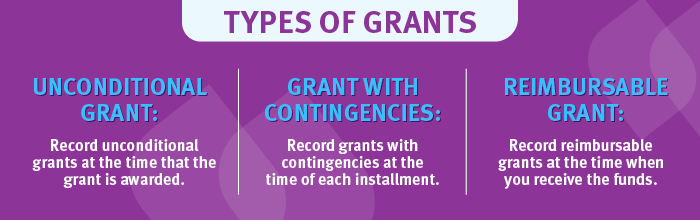
Unconditional grants, as their name implies, allow your organization to receive all of the funding at once and spend it at your discretion. To help you get a head start on financial planning, you should record an unconditional grant in full as soon as you’re notified that you’ve secured it, even if the money takes a few weeks to arrive.
Grants with contingencies are provided in installments as your nonprofit demonstrates to the grantmaker that you’re fulfilling the conditions they’ve specified. For example, if you’re using a grant to fund a community program, the funder might only agree to continue paying out the grant as long as you have at least 20 participants in the program. Since funding is less certain with these grants, record the first installment when you’re awarded the grant and each subsequent installment as you receive the funds.
Reimbursable grants require your organization to spend the money on an initiative up front before the funder pays back the costs you’ve incurred. You likely won’t know exactly how much the grant will be worth until the funding comes, so you should wait to record it until then. However, you should keep a detailed record of your grant-related expenditures to ensure you’re reimbursed for the correct amount.
When you apply for a grant, take note of which category it falls into so you know how to record the funding if and when it comes in. If the grant type is unclear or you have any other questions about recording, consult your nonprofit accountant.
As previously mentioned, the main reason to develop a solid grant management process is so you can report back to the funder. To prepare these reports effectively, be sure to:
Proper reporting instills confidence in grantmakers that your nonprofit can manage their funding effectively. This boosts your chances of receiving more grants in the future.
If your nonprofit manages its grants well, you’ll have more financial flexibility to innovate in your service delivery approaches and make a larger impact on your community. Transparency in your grant management processes boosts your nonprofit’s reputation. It shows that your organization is reliable and committed to fulfilling its mission. This may catch the attention of new funders and supporters, leading to even more funding in the future!