Whether you’re planning a major fundraising event, organizing a community project, or seeking regular support for ongoing programs, one thing is clear: volunteers are invaluable. However, because getting people to step up and volunteer is rarely easy, you must find ways to promote your volunteer opportunities.
Today’s world is filled with countless causes and initiatives. This competition for attention demands that your promotional efforts be proactive and strategic. From your volunteer management software to paid advertising, you have plenty of tools available to ensure you fill your volunteer roles. Let’s explore four proven multichannel marketing strategies for recruiting volunteers.
Start by exploring the recruitment tools your volunteer management software offers. Many platforms equip nonprofits with features that streamline and enhance volunteer recruitment efforts, such as:
Leveraging these features to promote your volunteer opportunities will make your recruitment process efficient and effective, ensuring you build a team of dedicated volunteers ready to support your organization’s mission. If your platform doesn’t offer these features, it might be time to upgrade to a system that meets your recruitment and management needs.
Push upcoming opportunities to prospective volunteers with paid advertising. Online advertising platforms offer advanced targeting capabilities that you can’t get with organic marketing. Best of all, you don’t even have to pay for one of the largest advertising platforms available: Google Ads.
Through the Google Ad Grant program, eligible nonprofits receive up to $10,000 per month to spend on Google Ads. Spend these advertising credits on promoting donation opportunities, events, educational content, and of course, volunteer opportunities.
Here’s a hypothetical Google Ad for a youth development organization seeking volunteers for its mentorship program:
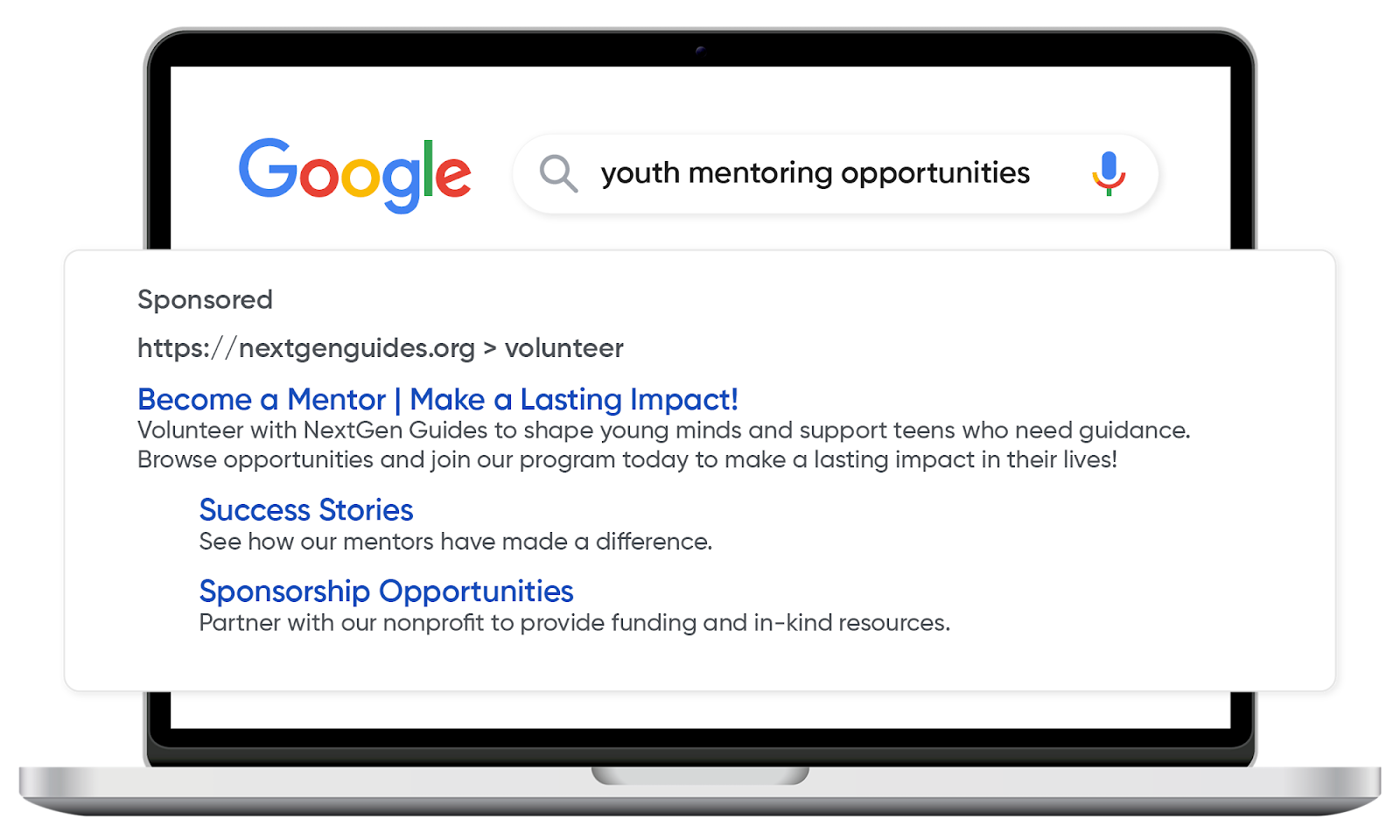
Getting Attention’s guide to Google Grants applications explains that your nonprofit needs to be a registered 501(c)(3) organization and have a functional, secure website to create ads like this for free. Government organizations, hospitals, healthcare organizations, and schools are ineligible. However, there is a separate program called Google for Education that offers free resources to schools.
To make the most of Google Ads, track ad performance metrics, like click-through rate and conversions. Your organization can improve its reach and attract dedicated volunteers by fine-tuning your keyword strategy and ad copy based on these metrics.
For many nonprofits, a popular channel for promoting upcoming volunteer opportunities is email marketing. Through targeted email campaigns, you can strengthen connections with current supporters and inspire engagement by sharing new ways to get involved.
Try these strategies to promote your volunteer opportunities through email:
Craft compelling subject lines to maximize your emails’ effectiveness. For example, the subject line for your Volunteer Digest email might be “New Volunteer Opportunities Just for You!” or “Volunteer with Us: January Roles Open Now!”
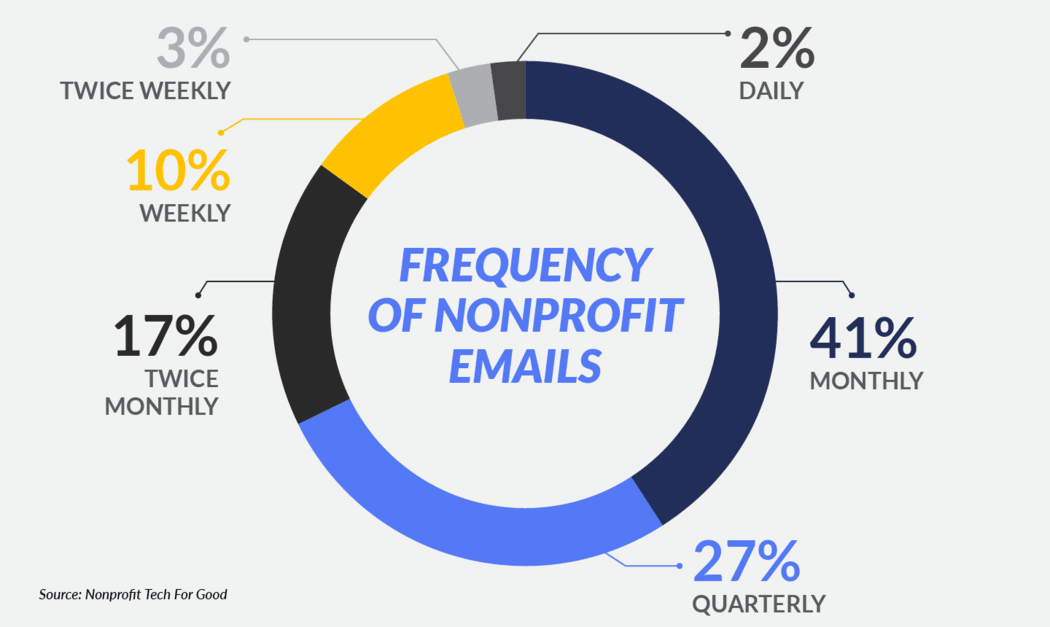
Additionally, be mindful of your email frequency. Aim for a balanced schedule that keeps supporters informed without overwhelming their inboxes. For reference, 41% of nonprofits send a newsletter monthly, 27% quarterly, 17% twice monthly, 10% weekly, 3% twice weekly, and 2% daily.
Platforms like Facebook, Instagram, and X (Twitter) allow nonprofits to reach current and new volunteers who may not be on their email lists. Inspire involvement by sharing stories, photos, and short videos of volunteers in action, making each role feel accessible and impactful.
For example, you might make a post highlighting corporate volunteer programs. 360MatchPro’s volunteer time off (VTO) guide explains that some companies provide paid time off for employees to volunteer. This enables busy parents to volunteer without sacrificing family time at home. Some businesses also offer volunteer grants, meaning they’ll donate to nonprofits where their employees volunteer.
Strategize how you’ll take advantage of each social media platform’s unique features to maximize engagement. For example:
Depending on the platform and its specific features, you can leverage scheduling tools to plan posts in bulk and ensure they’re released at the right time. This also spreads out your messages, so you can keep your nonprofit top of mind for volunteers.
To promote your volunteer opportunities and bring more attention to your initiatives, begin with the software and channels you already use. For a data-driven approach to nonprofit marketing, pay attention to which channels and types of posts drive the most sign-ups. From here, focus on those outlets and messages while improving strategies that are falling short. Over time, you’ll develop a robust outreach system for filling vital volunteer roles.